International Transfer Funding Options Explained
2 November 2026 · Plyna
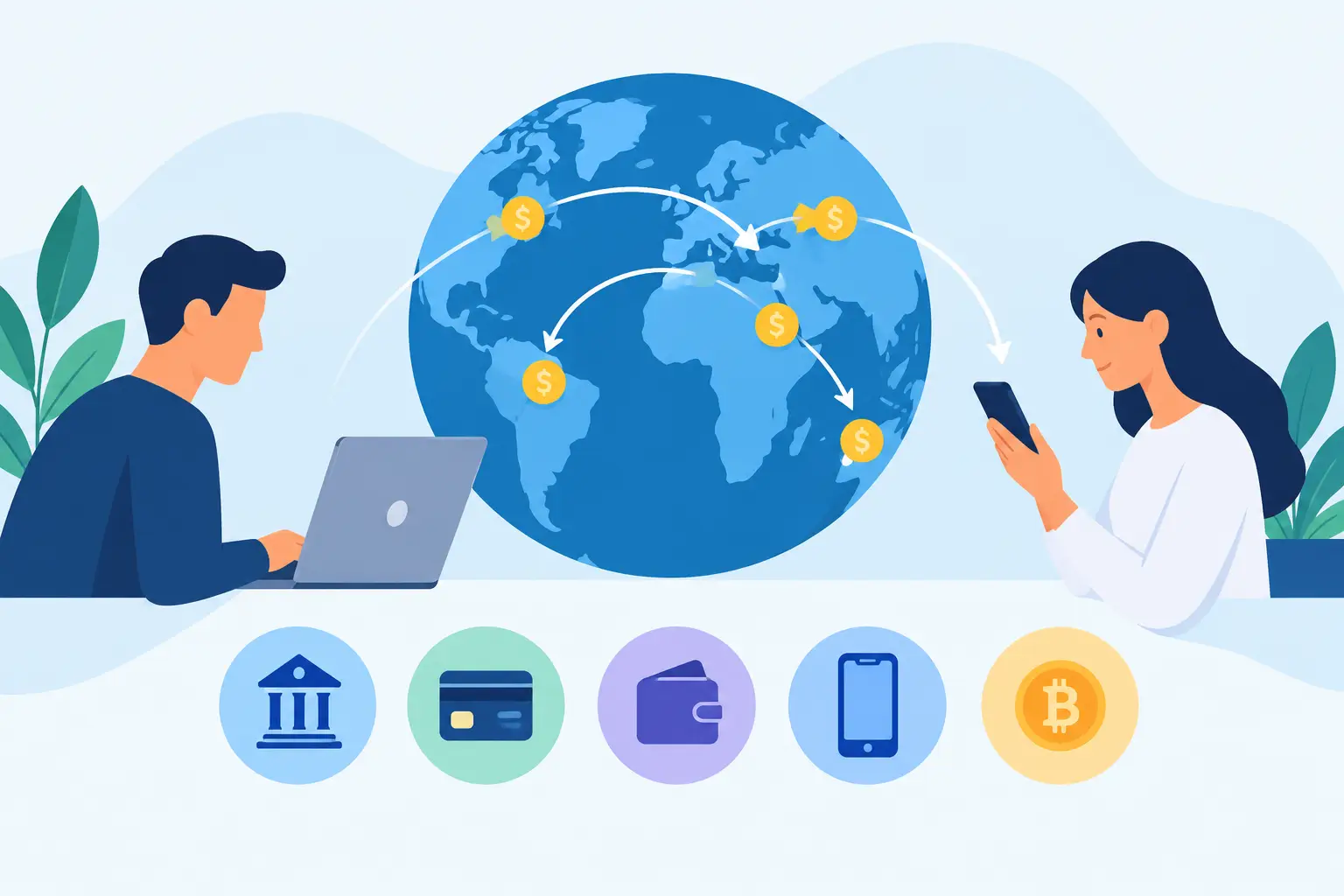
Your international transfer funding options do more than determine how you pay. They can change the fee, exchange rate, transfer speed and, ultimately, the amount your family member receives. A provider advertising a low fee may still deliver less if its card-funded rate is weaker or if the funding method triggers an extra charge.
For a £1,000 transfer from the UK, the useful question is not simply, “Can I pay by card?” It is: “After every cost and currency conversion, how much reaches the recipient?” That is the number that matters.
Why the funding method changes the payout
International money-transfer providers price transactions differently depending on how you fund them. Paying from a UK bank account is often cheaper because the provider receives cleared funds through bank rails. Paying by debit card can be faster, but may carry a higher fee. Credit cards can be more expensive again and may be treated by the card issuer as a cash-like transaction.
The funding method is only one part of the calculation. A provider may charge no visible fee for a bank transfer but build its charge into the exchange rate. Another may show a card fee clearly but still pay out more because its exchange rate is closer to the mid-market rate.
This is why comparing fees alone is a poor shortcut. The number you see is not always the number they get.
International transfer funding options from the UK
Bank transfer or open banking payment
For many UK senders, a bank transfer is the most practical way to fund an international payment. You send pounds from your current account to the remittance provider, usually through Faster Payments or an open banking connection that initiates the payment from your bank.
It is commonly the lowest-cost option, particularly for regular transfers or larger amounts. Providers generally face lower processing costs than they do for card payments, and that can mean lower fees or a better quoted rate. It also avoids the risk of a credit-card cash-advance charge.
The trade-off is timing. A Faster Payment may arrive quickly, but the provider still has to receive, match and process it before paying out abroad. For a transfer needed within minutes, a debit card could be quicker. For a monthly £1,000 family payment, bank funding is often the better starting point - but only if it produces the highest recipient amount on that day.
Open banking can reduce typing errors because you approve the payment through your banking app. It does not automatically make the transfer cheaper. Check the final payout before confirming.
Debit card
A UK debit card is often the fastest way to get a transfer started. The provider can usually confirm the payment immediately, which can be useful when the recipient needs funds urgently or when you are sending outside normal banking hours.
Convenience has a price. Some providers charge more for debit-card funding than for bank payments, while others offer similar pricing for smaller transfers. The difference varies by destination, payout method and promotion. A card-funded transfer to the Philippines may be priced differently from the same transfer to Nigeria or India.
Check whether the provider shows the card fee separately and whether the exchange rate changes once you select card payment. A fee of a few pounds is visible. A wider hidden FX margin may cost more.
Credit card
Credit cards are available with some providers, but they are rarely the default choice for sending money overseas. The provider may charge a higher processing fee, set lower limits or decline certain cards. More importantly, your card issuer may classify the payment as a cash advance or cash-equivalent transaction.
That can mean an upfront cash-advance fee and interest charged from the transaction date, rather than after your normal interest-free period. Rewards points do not necessarily offset those costs. Before using a credit card, check your card terms and the total recipient payout, not just the transfer provider's displayed fee.
If the transfer is for an emergency, the speed may justify the extra cost. For routine support payments, it usually makes sense to compare bank-funded and debit-card-funded quotes first.
Cash payment
Cash funding still exists through some agent networks, particularly where cash collection is a common payout option. You take cash to an authorised location, provide the required identification and fund the transfer in person.
This can help if you do not have a suitable bank account or card, or if the recipient needs cash collection rather than a bank deposit. But it may involve a trip to an agent, lower transfer limits and less favourable pricing than digital funding. It is also harder to correct a mistake once cash has been handed over.
Do not confuse cash funding with cash collection. One describes how you pay in the UK; the other describes how the recipient receives money abroad. A transfer can be funded by bank payment and collected as cash, depending on the provider and corridor.
Digital wallets and other payment methods
Some services accept digital wallets or offer payment through mobile-based methods. Availability differs by provider, device and destination, and the underlying funding source may still be your debit or credit card.
Treat these methods as a convenience layer, not a guarantee of a better deal. If your wallet uses a card underneath, the provider's card pricing may still apply. The final quote should state exactly how much is being sent, how much the recipient receives and when it is expected to arrive.
Compare the full cost, not the payment label
A funding method cannot be judged in isolation. The same provider can produce different outcomes depending on the route, the amount, whether funds go to a bank account or cash collection point, and how you pay.
For a standard £1,000 transfer, compare these figures side by side:
| What to check | Why it matters |
|---|---|
| Recipient amount | This is the real outcome after fees and currency conversion. |
| Exchange rate | Compare it with the mid-market rate to expose the FX margin. |
| Funding fee | Card and cash funding can cost more than bank funding. |
| Delivery time | A better rate is not always useful if the money is needed immediately. |
| Total amount you pay | Confirms whether extra charges have been added at checkout. |
The quoted exchange rate deserves particular attention. A provider can advertise “zero fees” while offering a rate below the mid-market rate. That gap is the hidden margin. On a £1,000 transfer, a difference of one or two percentage points can outweigh a small upfront fee.
Plyna compares real provider quotes using the recipient amount for a standard £1,000 transfer, rather than allowing headline rates or promotional claims to decide the ranking. That distinction matters because the best provider can change from one corridor to another, and from one day to the next.
Choose based on the transfer you are actually making
There is no single best funding method for every sender. Bank funding is often suited to planned, repeat transfers where cost matters most. Debit card funding can make sense when speed matters and the additional charge is modest. Credit cards should be approached cautiously because the cost may extend beyond the provider's quote. Cash can remain useful where access to banking is limited, but it is rarely the easiest option for a UK sender with a current account.
Also consider how often you send. A £5 difference may feel minor once, but it becomes £60 over twelve monthly transfers. If the rate is weaker by 2%, the annual cost can be far larger. Small pricing gaps become meaningful when they recur.
Before you press send, switch between the available funding options and look at the recipient amount each produces. Then compare providers on the same amount, the same destination and the same payout method. Use dated quotes where possible, because rates move and promotions expire.
The right funding option is the one that gives you the level of speed you need without quietly reducing what arrives. Send with the recipient's payout in view. Everything else is secondary.
Keep reading
- £1,000 Recipient Payout Example ExplainedSee how a £1,000 recipient payout example exposes fees, exchange-rate margins and the real difference between providers when sending money from the UK.
- International Transfer Fees UK: What Banks and Apps ChargeInternational transfer fees in the UK: what banks and money transfer apps charge, the hidden exchange-rate cost, and real averages from daily quotes.
- What Affects International Transfer Payout?Four things decide what arrives abroad: the exchange rate, fees, payout method and how you pay. See which matters most and how to compare providers.
See what every major provider would give your recipient today.
Compare today's rates →